At some point this year, a bigger customer will send you a supplier questionnaire.
Three years of accounts. Your insurance and policies. Who your key people are. How you’d keep delivering if something went wrong.
You’ll fill it in, send it back and think no more about it. If the answer’s yes, you get the work. If it’s no, you may never find out why.
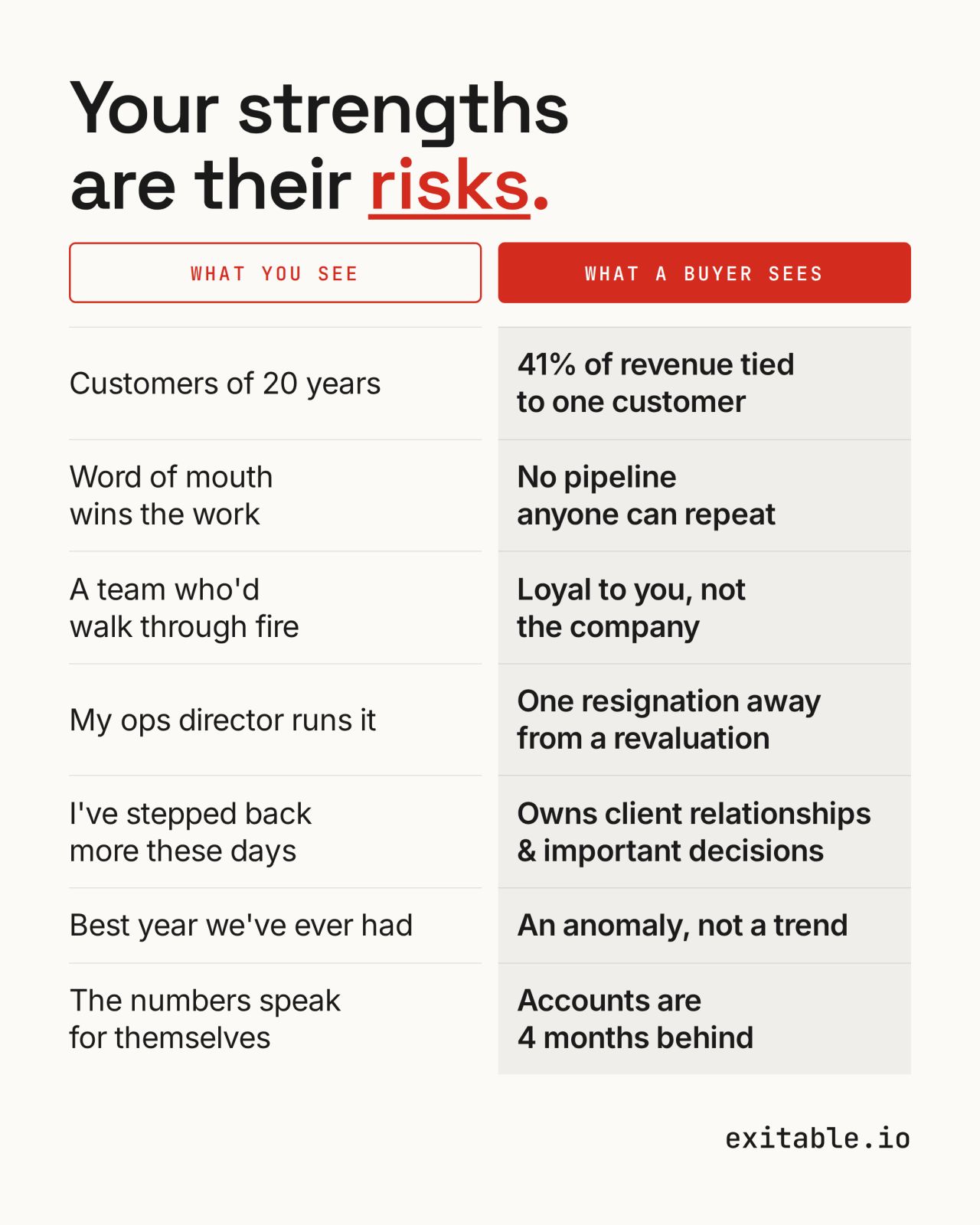
Look at those questions again though, because they’re a short version of what a buyer would ask before buying your business.
And that customer isn’t the only one asking. Your bank asks you the same things every time it reviews your lending. A good senior candidate asks them before leaving a safe job to join you. And investors ask them before deciding whether to call.
Capstone Partners, a US investment bank recently asked 400 owners of mid-sized private companies about their last twelve months. The ones who’d started preparing for an eventual sale received 34.5 percent more approaches from private equity, raised debt or equity 46.5 percent more often and reported 20 percent more revenue growth.
They got all of that while still owning and running their businesses. It turns out that getting ready to sell can mean you’re more visible and easier to check out. And buyers are only a few of the people doing the checking.
In practice, “easy to check out” means numbers a stranger would trust without you there to explain them. Answers that don’t all have to come from you. A team that can say how the business makes money and what happens if someone leaves.
None of that is paperwork for a sale. It’s what lets the bank lend more, the bigger customer say yes and the good candidate believe they’ll be allowed to do the job.
Capstone also asked owners whether their business would still be viable a year after they stepped away. Among those who hadn’t prepared, only about six in ten were confident it would be. If the owner isn’t sure, the bank won’t be either.
So here’s the real reason to be exit-ready long before you want to sell. The 20 percent revenue growth didn’t come from a sale. It came from being a visible business people find it easy to say yes to.
Get it ready for a buyer’s “yes” and you collect everyone else’s yes along the way. Whether or not you decide to sell.
All the best,
Gavin
P.S. If you’d like to know how your business looks to the people doing the checking, the Hidden Value Gap Quiz takes about four minutes. It tells you the No. 1 thing holding your valuation back.
, , , , , , , , , , , , , , , , , , , , , , , , , , ,
Figures from Capstone Partners’ survey of 400 owners of privately held US middle-market companies, May to July 2026.
Book a call and find out how to make your business more exitable